
BioShock, played again on the ocean floor
By Mara QuinnOctober 9, 2026
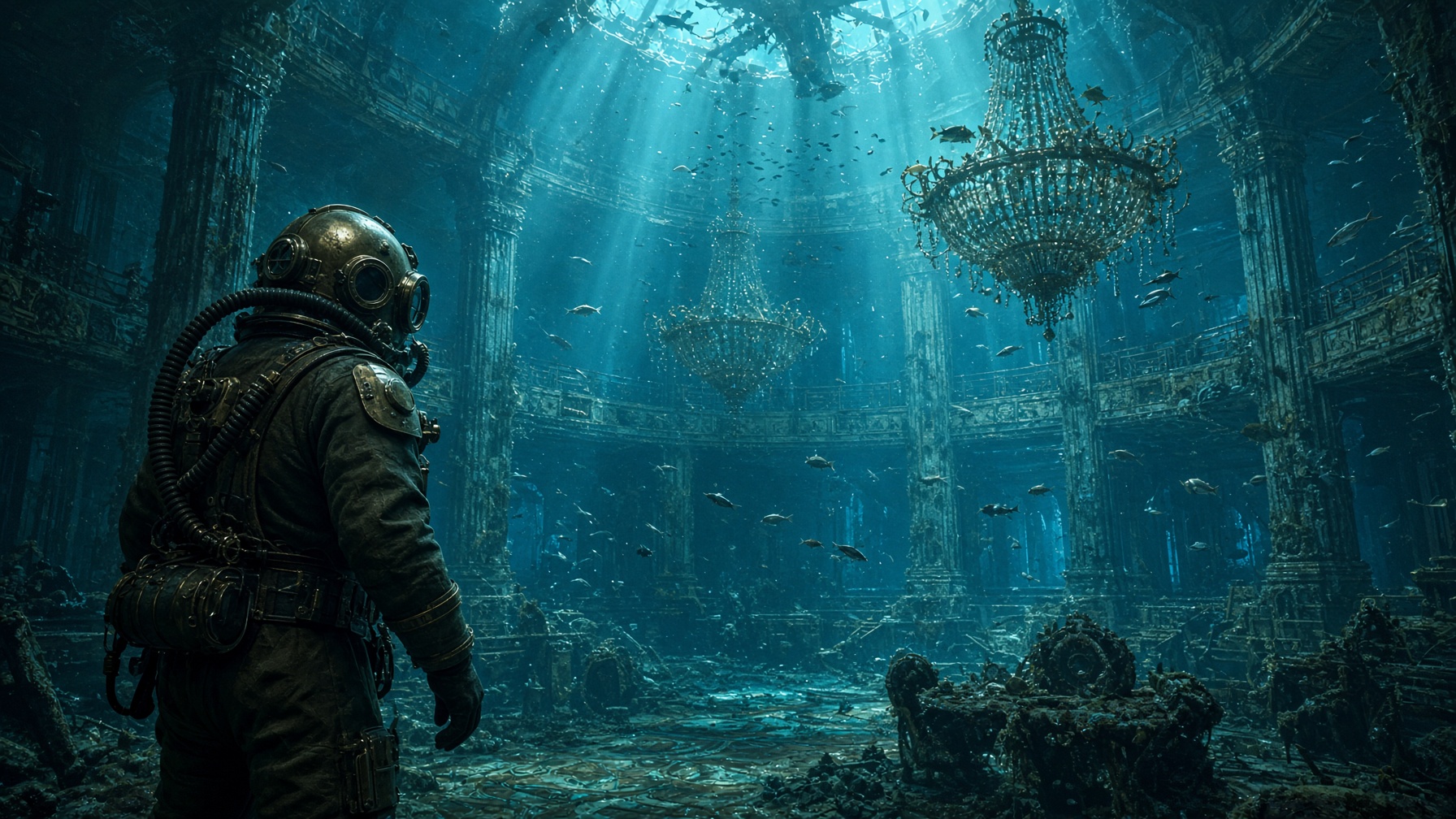
Irrational Games
This revisit discusses the opening and the city's philosophy. The ending stays in the dark.
You descend. That is the whole invitation, and BioShock (2007) never improves on it because it does not have to. A bathysphere, a voice that thinks it is your friend, and a city that believed it could deregulate human nature. The art deco is not set dressing. It is the joke: elegance bolted onto a place that eats its tenants.
Played now, the gunfeel is of its era. Plasmids are still the idea that sings — a left hand full of ice or fire, a right hand trying to stay practical, a shortage of everything that makes you scavenger rather than superhero. The audio logs do the literary work most modern games assign to a companion who will not be quiet.
A city with a thesis
Andrew Ryan's objectivism is not a riddle. The game pastes it on the walls and then shows you the walls underwater. What keeps it from being a lecture is the texture: a medical ward gone feral, a nursery of girls and the men who hunt them, a splicer arguing with a record that has already ended. You are not collecting lore. You are trespassing in someone's collapsed utopia.
The middle of the game is a shooter with brilliant rooms and ordinary corridors between them. That unevenness is real. So is the way a single piano cue can make a flooded mall feel like a tragedy instead of a level. Very few studios have been this sure about taste.
Why it still covers
We are not scoring the sequels here. Infinite is a different conversation. The original asks a cleaner question and lets the city answer it. If you have only met Rapture through screenshots, go down yourself. The first hour is a masterclass in withholding the map until the mood has already won.