
The rooftop hour: why stealth still beats the shootout
By Nia ColeOctober 18, 2026
The Game Cover
Every few years a big studio announces that stealth is back, as if it had left. It never left. It just stopped being the default way to advertise a game, because a silent corridor is harder to cut into a trailer than a helicopter. Players who like the work kept doing the work.
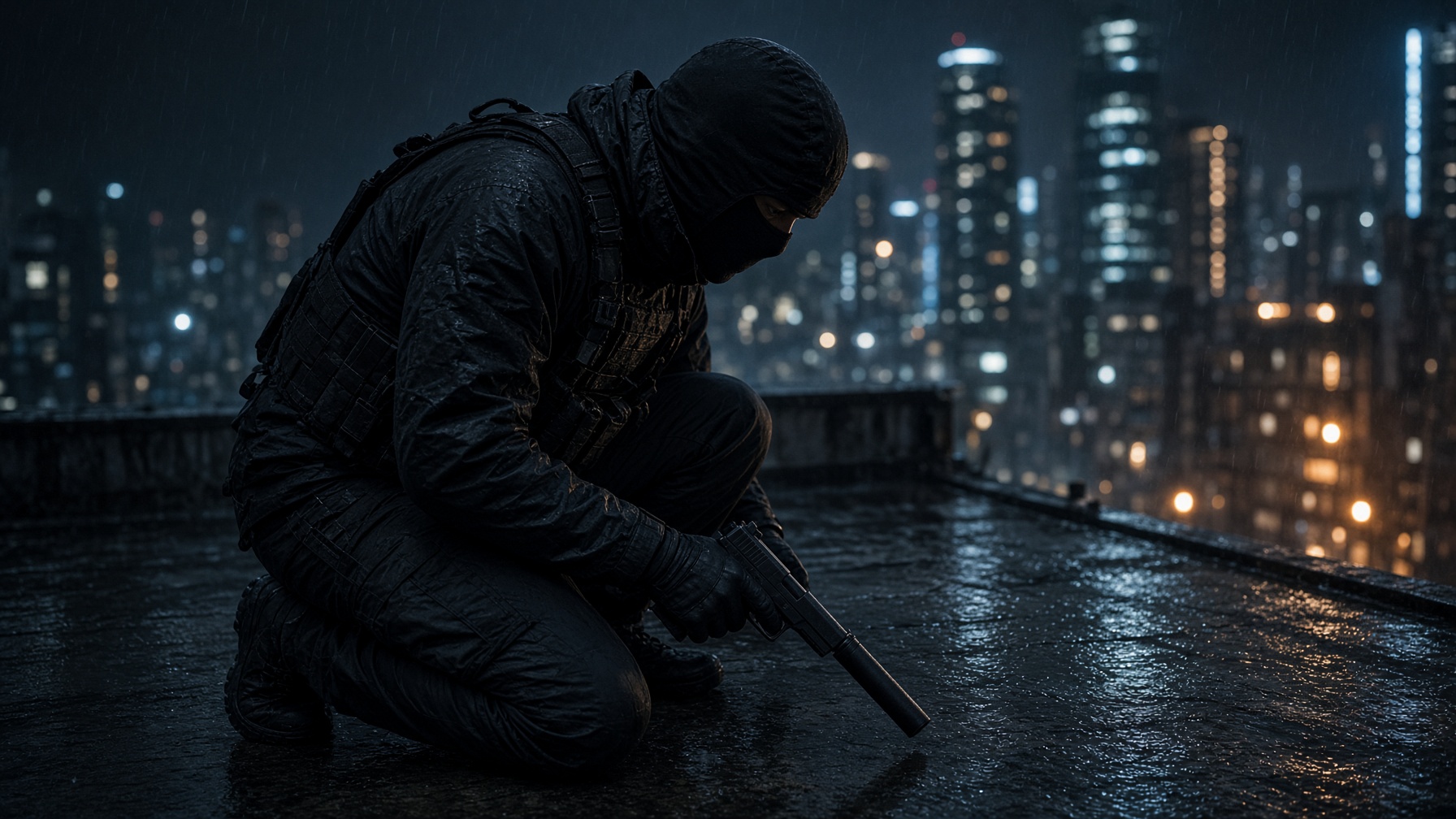
The pleasure is not the takedown. It is the minute before it. You are on a roof in the rain, the patrol has a gap you measured by counting, and the plan is still yours to ruin. No radar gift. No highlighted enemy. Just geometry, patience, and the small arrogance of thinking you are smarter than a guard who has done this route a thousand times.
Systems, not costumes
The games that endure treat stealth as a system you can refuse. You can go loud. The building will change its mind about you. Alarms, light, footsteps, and the social life of a room are all tools, and the fantasy is competence, not a body count. When a game removes the option to be clumsy, it also removes the pride.
Immersive sims and the leaner infiltration games disagree about how much to simulate and agree about the player. You are not a camera being walked through a set piece. You are a person who might have packed the wrong gadget. That risk is why a clean exit feels like authorship.
Leave the minimap alone
The fastest way to kill a rooftop is to explain it. A cone of vision drawn on the floor turns a guard into a puzzle piece. A ping that reveals every rifle turns a district into a checklist. The modern temptation is to help. The better temptation is to trust.
We will keep covering the shootouts. They pay the bills and they are often excellent. But if you want to remember a mission six months later, it is usually the one where you almost didn't make the jump, and nobody clapped, and the city never knew you were there.